Crop Planner | Service Regions Advisor hours Mon–Fri 08:00–17:30

Application fit

Sylvan industries — choose the cultivation path that matches your rooms

Detailed cards and a selector checklist help growers decide between mushroom houses, polycarbonate greenhouses, shade-screen nurseries and mixed specialty crop rooms.

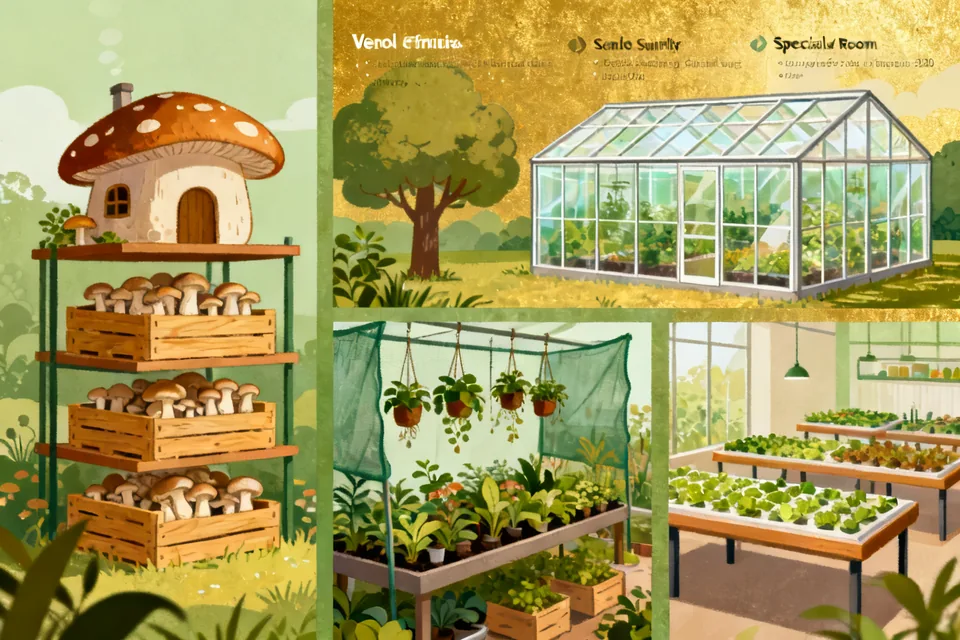
Illustrated crop room types for mushroom and greenhouse cultivation
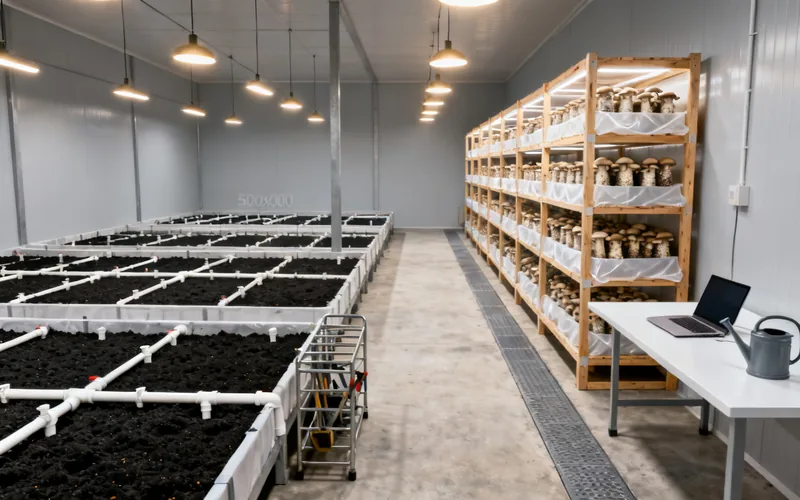
Insulated mushroom fruiting house interior

Mushroom houses

Insulated fruiting rooms prioritize spawn inoculation hygiene, substrate moisture near 62% and CO₂ exhaust paths. Sylvan shortlists spawn lots, bag volumes and climate kits against shelf density rather than floor area alone.

  • Preferred when flush calendars drive CapEx timing
  • Watch contamination risk at inoculation benches
  • Pair with 48–72 hour humidity spare kits
  • Limit: sealed rooms still need labor for bag handling peaks
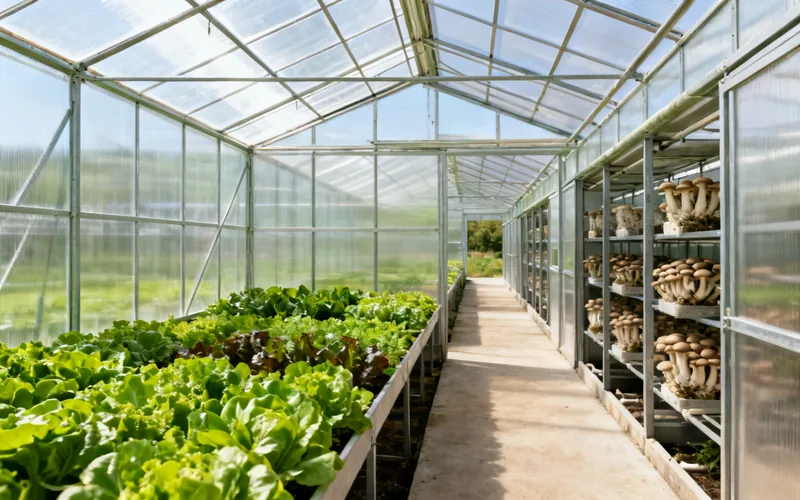
Polycarbonate greenhouse beside cultivation corridor

Venlo & polycarbonate greenhouses

Glass vs polycarbonate glazing trade-offs matter: higher light transmission versus insulation and impact resistance. Sylvan advisors document which crops sit under polycarbonate panels and which need drip fertigation beds for companion greens.

  • Useful for mixed fungi + greens programs
  • Shade screen add-ons for peak summer
  • Flow-rate sizing for fertigation manifolds
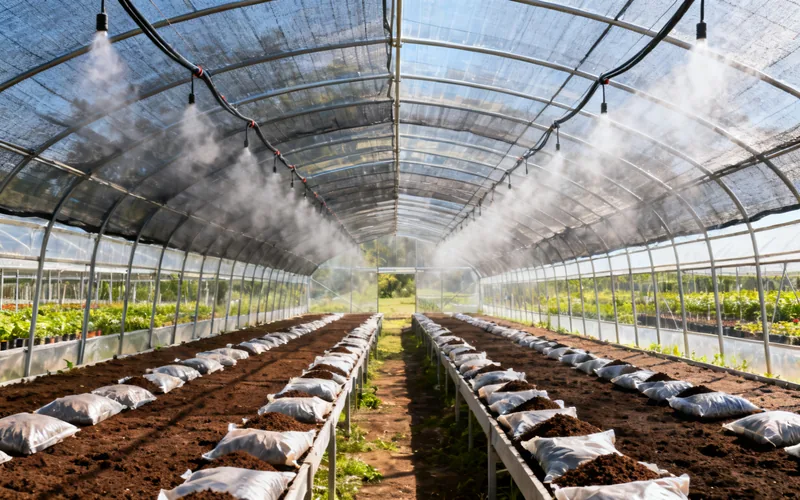
Shade screen nursery tunnel curing substrate

Shade-screen nurseries

Shade screen tunnels give growers a lower-CapEx space for spawn trials and substrate curing before committing full insulated rooms. Selection focuses on mist control and labor access rather than heavy climate automation.

  • Ideal for variety trials under 400 m²
  • Lower energy load than sealed fruiting rooms
  • Still needs hygiene discipline at inoculation
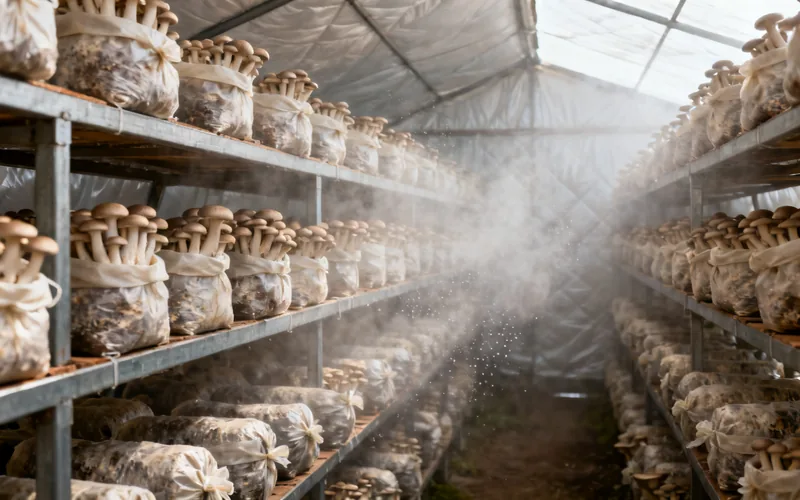
Specialty crop room with drip beds and fruiting shelves

Specialty crop rooms

Mixed rooms balance drip fertigation for leafy or herb crops with controlled fruiting cycles. Sylvan helps separate water loops, hygiene zones and scheduling so irrigation for greens does not disturb spawn colonization. Coverage area for companion beds is sized in hectares or acres only when outdoor blocks are attached; indoor loops are quoted in m² and m³/h.

  • Requires clear zoning of wet and dry tasks
  • Document moisture targets per crop family
  • Export rooms may need HACCP hygiene notes
  • Limit: shared HVAC can move spores if pressure cascades are wrong

How Sylvan checks a room before shortlisting

Advisors use the same field method on mushroom houses and polycarbonate greenhouses so moisture and flow numbers stay comparable across dealer quotes.

Test environment

Record ambient 18–24°C fruiting bands, RH setpoints and whether the envelope is insulated wall, glass or polycarbonate panel. Note aisle working width in meters before sizing VFD pump mist loops.

Measurement method

Substrate moisture is checked with a calibrated meter at three bag depths; target band 60–65%. Fertigation or mist flow is logged in m³/h at the manifold, not estimated from pump nameplates alone.

Decision output

Results feed a one-page shortlist: spawn inoculation volume, bag counts per bay, shade screen yes/no, and parts kits sized to 48–72 hour dispatch. Rooms above ~1,200 m² are flagged for staged loops.

Selector guide — answer before you buy

Use this checklist with your agronomist or procurement lead. Checking items does not submit data; it frames a clearer RFQ conversation with Sylvan.

Not sure which industry path fits?

Send your checklist answers and crop mix. Sylvan returns a guided shortlist with application notes you can share with dealers.

Required
Required
Valid email required
Required
Required
Include crop type, room size and timing